
Big Big Energy
- Jeanna Winchester PhD

- Apr 12
- 13 min read
The Straight of Hormuz Was Not On My Bingo Card.
April 12, 2026
Back in 2000, energy was something we rarely thought about until the lights flickered or a hefty bill landed on the doormat. We were stuck in old habits until a quiet revolution, led by everyone from engineers to homeowners, forced us to realize the old way of doing things was a dead end.
It wasn’t just a “green” trend; it was a survival tactic born from hard reality. Between overseas conflicts, the 2008 financial crash, and a series of massive hurricanes that crippled our aging power grid, we learned the hard way that our old systems were too fragile. We needed power that was resilient, local, and reliable.
For most families, energy isn’t an abstract concept—it’s a kitchen-table reality. When gas prices spike, it feels like a physical weight on the budget, often acting as a direct barrier to the American Dream for those living without a safety net. While we now produce more energy than ever, we are still caught in a strange paradox.
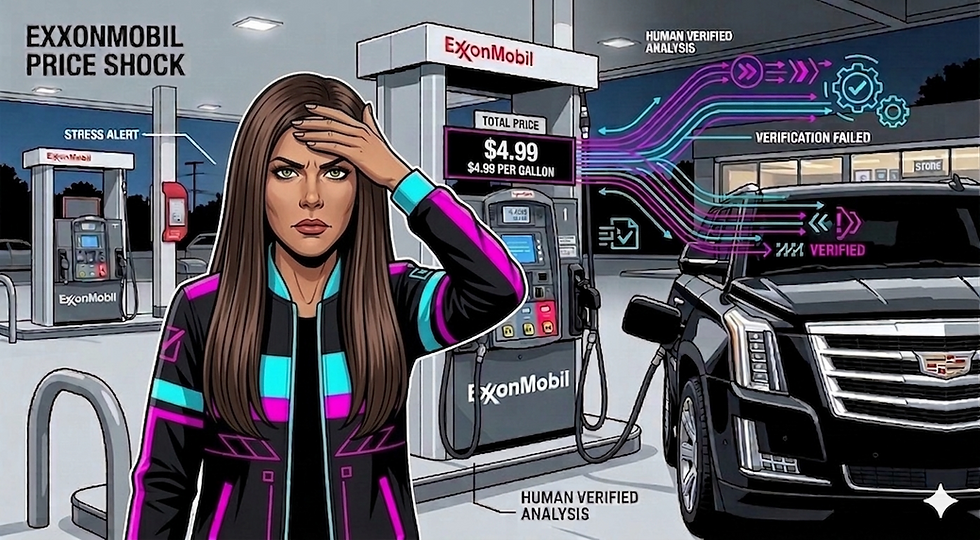
Think of the global oil market like a massive, shared swimming pool: even if we produce the most water, we can’t fence off our section. Because oil is a global commodity, a barrel from Texas costs the same as one from overseas. If a conflict halfway across the world, like the recent closure of the Strait of Hormuz, threatens the supply, the price for the entire pool rises. This is why gas jumped to $4.45 this spring; American companies simply won’t give a local discount when global buyers are willing to pay more.’’
To break free from being held hostage by these global price swings, we’ve spent the last 26 years engineering a better way forward. We are currently in the middle of a high-tech revolution where Science is Good Business. We’re now turning waste into wealth by capturing gas that used to be burned off and using “digital twins” to predict equipment failures before they happen, keeping workers safer and costs lower.
The future of power is also getting much closer to home.
With new batteries holding 40% more energy, your parked car can even act as a backup generator for your house during a blackout. The big lesson nowadays is that true independence is complicated.
Even though we’ve built a shield by sourcing 70% of our oil from neighbors like Canada and Mexico, we are still tied to international chaos. This transition is now a matter of national security. By fast-tracking domestic nuclear, wind, and solar, we are building a buffer that keeps the wheels turning regardless of what happens abroad. We are finally moving into the driver’s seat, creating an energy system that isn’t just about finding more fuel, but about ensuring our local economy stays steady no matter what.

Think of the average American driver like a marathon runner who never gets an off-season, covering about 13,600 miles every single year. Of course, that number shifts depending on who you are and where you live.
If you’re in the thick of your career, roughly between the ages of 20 and 54, you’re likely driving twice as much as a teenager or a retiree just to keep up with work and family life. Statistically, men also clock significantly more time behind the wheel than women, averaging over 16,000 miles compared to about 10,000.
This constant need to be on the road is becoming a major problem because, as of April 2026, the global energy market is essentially on a “war footing.” The closure of the Strait of Hormuz has triggered the biggest supply crisis we’ve seen in modern times. This isn’t just a temporary hiccup; experts from the EIA and Goldman Sachs warn that we are facing a structural shift that will likely keep gas prices painfully high through at least late 2028.
To understand why the outlook is so grim, you have to look at the math. The Strait of Hormuz is a massive bottleneck, handling 20% of the world’s oil. With 11 million barrels currently offline and pipelines only able to reroute a fraction of that, there is a massive supply gap that US drilling simply can’t fill. Even if the current ceasefire holds, the damage is done. Insurance costs for oil tankers have skyrocketed by 400%, a “security tax” that gets passed directly to you at the pump.

Analysts see a 95% chance that prices will stay high over the next year, with crude oil potentially averaging $96 or more. Even in a “best-case” scenario over the next two years, we are looking at gas prices hovering between $4.25 and $5.50 a gallon.
Because the infrastructure to bypass these global conflict zones is already maxed out, the smartest way to protect your wallet is to change how you fuel your commute. Just this week, the government is extending the use of E-15 gasoline, which is gas mixed with 15% ethanol.
Since ethanol is made in the Midwest, it isn’t tied to Middle Eastern shipping lanes. By cutting your gas consumption, you effectively slash that “geopolitical tax” on your bank account by 50%. The reality is that even if the fighting stops today, the high cost of shipping and the lack of supply mean expensive gas is here to stay for the foreseeable future.
I spent most of my childhood in the Midwest, and my Tribe is in Michigan and Indiana. Ethanol use is normal for me, and it’s something that farmers have been doing for 50 years. Today’s technology takes that classic American approach to energy and expands it to your driveway. Let’s take a look at what ethanol is, how it ends up in your gas tank, and some ways energy innovation is Good Business.
What is Ethanol and Why Is It In My Gas Tank?
To understand the chemistry of ethanol fuel, a high-octane alcohol usually distilled from American corn, you have to look at it as a molecule with a split personality. In the lab, we call this being amphiphilic, which is just a fancy way of saying it has two very different sides that allow it to interact with both oil and water.
At its core, ethanol (C2H5OH) is a simple chain of two carbon atoms. One end of this chain is non-polar, meaning it’s greasy and loves to hang out with gasoline. The other end features a hydroxyl group, which is an oxygen and a hydrogen atom bonded together, making it polar. This polar end is a total social butterfly because it loves to bond with water.
Think of the fuel at your local gas station as a blended smoothie. While we usually just call it gas, it’s actually a mix of traditional petroleum and ethanol. The “E” numbers you see on the pump are just the recipe: E10 is the standard 10% alcohol mix, while E-15 bumps that up to 15%. Most people are making the switch to E-15 because it’s cheaper and provides a higher octane rating, which helps your engine run smoother.
Creating that ethanol is a bit like nature hitting the rearrange button on atoms. It starts by taking corn and using enzymes that snip long chains of starch into simple sugars. Yeast then eats that sugar and breathes out ethanol and carbon dioxide.
To get it pure enough for your car, the mix is heated so the alcohol evaporates away from the water, then passed through a high-tech sponge called molecular sieves to soak up any remaining moisture. The result is a 99% pure, high-energy liquid ready for the road.
Inside your engine, this blend works like a built-in cleaning crew. Because ethanol carries its own oxygen, the fuel burns more completely, which is great for your tailpipe
emissions. It also acts as a natural stabilizer, preventing that annoying “knocking” sound during combustion. You might notice a tiny 1% or 2% dip in gas mileage because alcohol has slightly less raw energy than pure gasoline, but the lower price at the pump usually covers that “extra sip” of fuel.
There is a tradeoff, though, that bit of a split personality makes ethanol “hygroscopic,” meaning it acts like a magnet for moisture in the air. If a car sits for too long, the ethanol can grab onto that moisture and sink to the bottom of the tank in a messy glob. To prevent this, engineers add chemical glue like Isobutanol to keep the gas and alcohol bonded together, along with corrosion inhibitors that act like a microscopic raincoat for your metal fuel lines.
Is it right for your car? If your vehicle was made in 2001 or later, which is almost everyone on the road, E-15 is perfectly safe and approved. The only time you need to be careful is with small engines like lawnmowers, boats, or vintage classic cars. Those older fuel systems aren’t built for the thirsty nature of alcohol, so they’re better off with E10 or ethanol-free gas. For your daily driver, however, E-15 is a smart, high-tech way to save money while keeping your engine running clean and quiet.
Issues with the USA Are Expanding E-15 Usage Through the Summer, But We Need It All Year Long
Scaling up E-15 is a bit like trying to widen a highway while the cars are already flying down it at 80 miles per hour. Right now, the government is basically using an emergency bypass to make this happen. Normally, E-15 isn’t allowed to be sold in the summer because of smog standards.
Ethanol-based fuel can technically increase the risk of producing smog, but cars made in the last few decades have new technology to filter out this effect and take that risk away. For this and other reasons, on March 25, the EPA stepped in with an emergency waiver.
They are trying to get rid of the confusing patchwork of different state laws and move toward one national standard. This makes it much easier for pipelines to ship fuel across the country without having to worry about which state is using which recipe. But even if the law says it’s okay, the actual pipes and tanks at your local gas station are a different story.
That’s the real bottleneck.
It can cost a station owner over a million dollars to upgrade their equipment to be E-15 compliant. Uncle Sam is helping out with over $500 million in grants to install new flex-fuel pumps, but many station owners are still nervous. They don’t want to spend a fortune on upgrades if the government is only giving out temporary 20-day permission slips. They want a permanent law so they know their investment is safe.
Extending this innovation year-round shows all the signs of Science is Good Business, and with any luck, we’ll see real change here.
The government is heavily debating this hot topic, and we can only wait to see what they do.
Economically, we’re even talking about this because E-15 is currently about 25 cents cheaper than regular gas. Since we had a record corn crop last fall, we’ve got plenty of ethanol to go around, which acts as a domestic “buffer” against the volatility of global oil.
The biggest hurdle left is actually a paperwork problem. A lot of station owners don’t know for sure if their underground tanks can handle E-15, and if they can’t prove it, their insurance won’t cover them if a leak happens. So, while the fuel is ready and the price is right, we’re still waiting for the infrastructure, and the laws, to finally catch up to the reality of 2026.
Maximizing Your American Energy Independence By Combining E-15 With A Hybrid Car
Running E-15 in a hybrid vehicle isn’t just a clever way to save a few bucks; it’s a genuine mechanical win-win that fits right into the modern American lifestyle. Think of it as a specialized fuel for a specialized engine. Because hybrids are constantly toggling between electric power and their gas engines, they deal with a lot of “cold starts.”
In a normal car, the engine stays warm once you’re moving, but a hybrid engine might kick on suddenly when you’re already at highway speeds. E-15 helps here by offering a higher octane rating, essentially acting as a stabilizer that prevents the engine from struggling during those sudden bursts of activity.
Combining these two American innovations could solve several issues that have prevented innovation from entering the market, reducing the traditional oil monopoly that exists today, and opening us up to crises like we are seeing now.
Beyond just the smooth ride, this fuel acts like a mild cleaning agent for your engine. The chemistry of E-15 helps keep your fuel injectors and valves clean, preventing carbon buildup and even protecting your oil from getting watered down.
This is an important point because it’s a low-maintenance way to keep a high-tech machine running longer.
Since hybrids often rely on battery power, gas can sit in the tank a little longer, and an engine without this additional cleaning component might not run long enough to burn off all its gunk.
When you look at the math, the case for E-15 gets even stronger. Even though ethanol has slightly less “punch” per gallon, meaning your mileage might dip by about 1%, the price at the pump more than makes up for it. In 2026, E-15 is usually 15 to 30 cents cheaper than standard gas.
With appropriate legislation, rolling out this technology all year long could save Americans real money every year, getting rid of that annoying “summer price spike.” Even if your 50 MPG hybrid drops to 49.2 MPG, you’re still coming out ahead on every single fill-up.
It’s about the cost-per-mile, and E-15 consistently wins that race.
This shift toward smarter fuel is happening just as America is going through a massive hybrid boom. About one in five cars sold today is a hybrid, acting as the perfect middle ground for folks who want efficiency without the full commitment of an electric vehicle.
American automakers like Ford have even mastered the hybrid truck, which is becoming a huge hit not just for the gas savings, but because they act like giant mobile batteries, letting you plug in power tools at a job site or a coffee maker at a campsite. From the affordable Ford Maverick to luxury Lexus SUVs, the hybrid isn’t just a niche choice anymore; it’s becoming the new American standard for how we get from point A to point B.
But What Are The Real Numbers And How Does It Affect My Wallet?
To figure out the real-world impact, I looked at the typical American driver who covers about 13,600 miles a year in a standard car that gets 30 MPG. If you insist on Pure Gas, you’ll get the best mileage, about 31 MPG, but you’ll pay a premium penalty of nearly 90 cents more per gallon just because it’s a niche product. On the flip side, if you go with E-15, your mileage drops slightly to about 29.5 MPG, but the price at the register is so much lower that the efficiency loss doesn’t even matter.
Across the country, the savings tell a clear story. If you live in the Midwest or the Plains, you’re sitting in the ethanol sweet spot. Because you’re close to where the fuel is made, E-15 is often 30 cents cheaper than standard gas. Even in the Northeast or Northwest, where gas is generally more expensive, switching to E-15 still keeps nearly money in your pocket, annually.
The most striking part is what happens when you compare the extremes. In the Northwest, a driver using Pure Gas is shelling out over $2,100 a year, which is $400 more than if they had just used E-15. When we break it down to the “cost-per-mile,” E-15 wins every time at about 10.7 cents, while Pure Gas climbs nearly to 14 cents.
In short, even though your car will technically drink about eight more gallons of fuel a year on E-15, the math is firmly on your side. The deep discount at the pump more than makes up for the extra sips of fuel.
Well, Hybrids Used To Be Cheaper, But They Went Up In Price Recently…
For those worried about the “hybrid premium,” that extra chunk of change you pay upfront for the battery technology, the 2026 market has mostly fixed that problem. Many of the most popular SUVs on the road today now come standard with hybrid engines, meaning there’s no extra cost at all.
For those who do have a premium, like a Civic or a Corolla, the fuel savings pay you back in less than a year. Even for a heavy-duty work truck like a Ford F-150, the hybrid system pays for itself in about three and a half years, and that’s not even counting the benefit of having a built-in generator for your power tools. Utilize E-15 innovations, and that payoff occurs even sooner, and the savings continue every year after that.
What Happens If They Won’t Extend the E-15 Standards All Year Long?
Well, a combination of E-15 standards, increased production of American-made hybrids, and a few other changes would take us from mostly independent to saving Americans thousands of dollars each year.
Let’s talk about what those few other changes are. Yes, your choice of car and gas mixture matters, but they aren’t the only thing standing between your wallet and a total meltdown at the pump.
Right now, as the chaos in the Strait of Hormuz chokes off global oil, the US government and the energy industry have built a massive mechanical shield to keep gas from spiraling past that dreaded five-dollar mark. This isn’t just wishful thinking; it’s a high-stakes, multi-front defense strategy designed to protect the average American driver.
There’s the global chess game with our oil reserves. The USA is leading a 33-nation team to flood the market with oil from the Strategic Petroleum Reserve.
Just this past week, the Department of Energy put out a call for another 30 million barrels. Think of this like a payday loan for oil companies: they borrow the crude now to keep prices from spiking and agree to pay it back with a little extra once things calm down. This massive 400-million-barrel surge is specifically designed to plug the hole left by the conflict overseas.
On the home front, we are leaning into American Energy Dominance like never before. USA oil production is higher than it has been in 20 years, and there is a lot of innovation that has gone into drilling smarter, reducing risk, and finding the oil more efficiently.
Finally, there’s a serious push in Washington and state capitals for a Gas Tax Holiday. Some states just implemented these holidays a few days ago. On the federal level, Congress is looking at a six-month break that would instantly knock about 18 cents off the price of a gallon of gas.
The bottom line is simple: the Strait of Hormuz is a huge problem for the world, but these domestic workarounds are currently acting as a 70-cent-per-gallon shield for your bank account. It’s a complex operation, but the goal is human-verified and straightforward, keeping you moving without going broke.
Because seriously, despite the wallet buster we are seeing now, it could be so much worse.
Thank You For Spending This Time With Me Today.

All Content, Audio, Visuals & Imagery Are Property of JWPhD
Copyright 2026
I hope you will Like, Share, Follow, Subscribe and Comment below.

Don’t forget to check out Human Verified on Social!
Thanks to Gemini, YouTube, and the entire Google suite of products for assisting with this and all the Human Verified articles.


Comments