
Humans Need Humans
- Jeanna Winchester PhD

- Mar 13
- 17 min read
Updated: May 18
Hear me out on this...
March 8, 2026
You would be surprised.
While this may seem intuitive, we often have to remind ourselves that humans need humans, especially in a digitally controlled world. Our hyper-digitized existence creates the illusion of isolation, leading entire swaths of society to swap physical presence for technological substitutes.
Yet, a screen doesn’t silence the biological pull to other humans. In the current climate where the US is in yet another protracted conflict with yet another Middle Eastern nation, this has never been more true.
I have a confession to make: I am a total social butterfly. I always have been. My Myers-Briggs profile is a textbook ENTJ. I first took the test at 18, while double-majoring in Biology and Psychology with minors in Chemistry and Communicative Disorders. Since my college lacked a dedicated Neuroscience track, I was balancing the requirements for both an MD and a PhD, not sure which journey I wanted to embark on. I’ve retaken the MBTI countless times across various courses, and the results are always the same: off-the-charts ENTJ.
Every time. I am the most extroverted that extroverted people can be. I’ve always been a person who could talk to anyone, regardless of their race, ethnicity, orientation, culture, background, or language. Inevitably, we’d find a common interest and build from there. My friendships have lasted decades, no matter what state or country I was living in. My friends are ride-or-die and have been since day 1. If I give the signal, we ride at dawn.
I am thankful for this, especially given the trauma that Millennials have suffered since 9/11/01. We supported each other through each of the many crises, Armageddons, whether viral or whatever, the War on Terror, and the great financial meltdown of 2008. When we were young, we were told of the great opportunities the new millennium would bring, and all because of the boom of the 1980s, the digital revolution of the 1990s, and the peace the US had brought to the world. We were told that as Americans, we were safe anywhere, the dollar was invincible, and the housing market was a ladder to guaranteed retirement for any “good person” willing to work hard.
Then came the 3 planes that changed our lives forever. Two of them took the lives of thousands, while the other was steered by heroes who gave their own lives to save the Pentagon.
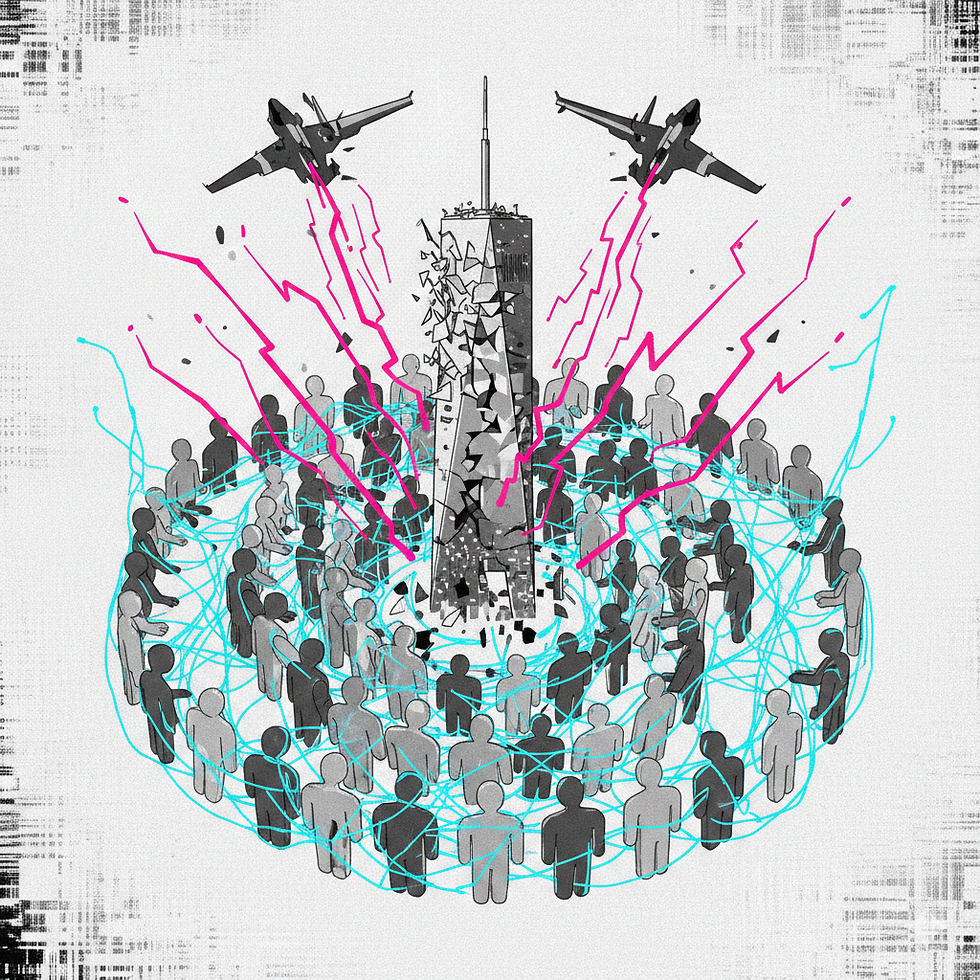
It was a horrific scar on our history that could have shattered the American spirit, but it did the exact opposite. In the years that followed, and even now, we live by the words, “We do not give in to Terror.” Despite the haunting fear of another attack, we refused to stay huddled in bunkers. We went back out into the world and lived. That was the ultimate act of defiance: refusing to let fear dictate our lives.
Even with the material wealth of the 80s and the digital shift of the 90s, the 2000s and 2010s became defined by human solidarity. We stood together not just because we had to, but because only in the warmth of each other could we find the peace that the rest of our lives couldn’t give us. And I think that’s the best example I can give you. Humans need humans. It’s how we survive the darkest of times and how we will get through the dark times to come.
In this article, I’ll explore the biological and psychological roots of why humans need humans. We’ll examine how digitization has shifted that dynamic and how advancements in therapy help us process these layers of trauma. I believe Millennials, Gen Z, and Gen Alpha occupy a unique historical vantage point; we have the tools to take the hard-won lessons of the last 25 years and help the next generation heal from the trauma they’ve inherited.

It all starts with biology.
The Controversial Theory of the Selfish Gene by Richard Dawkins
The “Selfish Gene” theory, famously coined by Richard Dawkins, suggests that our bodies are essentially “survival machines” built to replicate DNA. In the primate world, this explains why animals stick together. Through “Inclusive Fitness“ and Hamilton’s Rule, a gene can thrive by helping relatives who share that same DNA.

It’s a biological calculation: an animal will act selflessly if the benefit to a family member outweighs the cost to itself.
Living in groups provides safety and ensures that everything is invested back into the genetic line. Cooperation also extends to non-relatives through “Reciprocal Altruism.” This is a “tit-for-tat” social marketplace where primates trade favors, like a “you scratch my back, I’ll scratch yours“ agreement. This theory suggests that while the social contract looks like friendship, it’s actually a strategic investment in social reputation and long-term alliances.
But not everyone is always perfectly aligned. Bring on the drama! Luckily, our second driving force is culture. Using what Dawkins called “Memes,” primates pass down ideas and habits through imitation rather than just DNA. These cultural shifts can override raw biological drives, allowing groups to adopt peaceful behaviors or new survival techniques.
This complexity is why we have the Social Brain Hypothesis: our large brains likely evolved specifically to manage these intricate webs of favors, deceptions, and social norms. Ultimately, we are driven by two blueprints: the genes that want to replicate our DNA and the memes that want to spread our ideas.
Altruism Might Be Helping You Get Laid, Which Helps Our Selfish Genes
Helping a stranger across the world seems to contradict the idea that our genes are purely selfish, but Evolutionary Biology explains this as a high-tech misfire of ancient instincts. For most of history, humans lived in tiny groups where everyone was either a relative or a neighbor you relied on daily. Because of this, our brains evolved a rule of thumb to be kind to those around us. Today, global media triggers those same ancient feelings; when we see a face in need on a screen, our biology reacts as if they are a member of our own close group.
Insert puppy left in the cold, harsh rain, and a Sara McLauchlan song in the background.
Beyond these deep-seated glitches, helping others serves as a powerful social signal. By being generous, we build a reputation as reliable partners, which actually makes us more attractive and successful within our own communities.
And of course, we’re driven to get laid, make babies, pass on those genes, and in doing so, the selfish genes be goonin again.

Moving Beyond The Selfish Gene And Into The World Of Psychology
While the Selfish Gene theory focuses on the biological “why” behind our survival, modern psychology looks at the “how” of the human mind, and our genes may have designed emotions like empathy and love to ensure their own replication. Yet, once those emotional tools existed, humans began using them for things that have nothing to do with DNA, such as adopting children or supporting global charities.
This shift suggests that human culture is a powerful force in its own right.
Just as farming changed our physical ability to digest milk, our complex society has rewired our brains to seek belonging and shared meaning over simple reproduction. This creates a fascinating mismatch between our Stone Age biology and the modern world. Our genes are essentially obsolete software running on advanced hardware, leading us to seek digital approval from strangers or the pleasure of connection without the goal of passing on DNA. Ultimately, the human mind has developed its own operating system that can, and frequently does, override the basic instructions of our genes to pursue a more empathetic and just world.
It Keep Us Safe And Gives Our Brain A Break From It’s Vigilance
Social Baseline Theory suggests that being around trusted people isn’t just a nice-to-have, but it’s actually our brain’s default setting. Because your brain is an energy hog, it constantly looks for ways to save power by outsourcing work to others. When you’re in a group, you subconsciously share the burden of watching for danger or managing stress. This load sharing is so physical that even when you’re walking up a steep hill, it literally looks flatter to your brain when you’re standing next to a friend. Your biology treats social connections like oxygen or food; they are vital resources that make the world feel less demanding.
Not that everything is about me, but let’s make it about me. 🤣 Just for a minute. I promise!
From an Evolutionary Perspective, being a total extrovert is essentially a high-stakes bet; it comes with big risks, but the potential rewards for our ancestors were massive. Think of it like this: while introversion was all about saving energy and playing it safe, extroversion was the human version of active exploration.
Evolution doesn’t really care about making a perfect human; it cares about survival. Traits hang around because they helped our ancestors stay alive long enough to pass on their genes, and being an extrovert offered a serious competitive edge.
First, consider social networking. Back in the day, your survival literally depended on the size and strength of your group. Extroverts were the ones out there constantly meeting new people and building those circles. A larger network meant you had more eyes out for predators, more hands to help gather food, and more allies to back you up in a fight. Plus, those outgoing types often acted as the glue of the group, stepping in to mediate drama and keep everyone working together.
Then there’s the mating game. Extroverts tend to be more visible and assertive, which makes them hard to miss when looking for a partner. That high-energy, confident vibe was essentially a signal to others that they were physically fit and ready to take on the world; qualities that were highly valued when it came time to getting low down and dirty dirty.
Finally, extroverts were the explorers. Because they were wired to chase rewards rather than stress about threats, they were the ones willing to wander into unknown territory. While others might have stayed in a familiar, safe spot, the extroverts were checking out what was over the next hill. This meant they were usually the ones to find new, untapped food sources or safer places to hide out, helping their whole community adapt to a changing planet.
You might be thinking, “If being an extrovert is such a superpower, why isn’t everyone extroverted?” Well, nature loves a balance. High-risk behavior carries a high price. If you’re always pushing boundaries or being too loud, you’re more likely to get hurt or kicked out of the group.
That’s where introverts come in. They acted as the essential “safety and maintenance” system.
While the extroverts were out there exploring, the introverts were providing the calm, careful observation needed to make sure those risks didn’t end in disaster. In the end, we needed both: the extroverts to push us forward into new territory, and the introverts to keep us safe while we did it. It was a perfect team effort for survival.
Our social roles evolved to act as fuel for our brains, helping us navigate a tough world while providing a safe harbor to recover from the struggle. But when we’re isolated, our biology shifts into an emergency state. Because we can’t share the workload, our nervous systems stay on high alert, redlining just to keep us standing. Digital connections rarely fix this, as they lack the physical presence our ancient brains require to truly feel safe.
Modern life breaks this social baseline by forcing us into chronic isolation. Whether we’re physically alone or just lack reliable support, our brains start viewing the world as dangerous, making small challenges feel like life-or-death crises. We experience this as a “traumatic feedback loop”: our isolation makes us hyper-vigilant, which ironically makes it harder to connect with others, keeping us trapped in a cycle of feeling like we are always on our own.
From an evolutionary view, trauma isn’t a sign that you’re broken; it’s a survival-based update. Our ancestors saw social rejection as a death sentence, which is why abandonment hurts so deeply. After a betrayal, your brain stays on high alert to protect you from being hurt again. While this feels like a burden, your genes are simply choosing to be safe rather than sorry. In our modern, digital world, this mechanism backfires, as we’re constantly bombarded by global tragedies that our brains were never meant to process all at once.
Sound familiar? Yeah. Me too.
The Psychology of Boomers, Gen X, Millennials, Gen Z, and Gen Alpha
In 2026, psychologists have moved beyond seeing generations simply as age groups, instead viewing them as unique cohorts defined by the specific “psychological blueprints” formed during their formative years. Because the human brain does not fully mature until around age 32, the social and economic environment during that time sets a permanent baseline for how a person perceives trust, safety, and their own identity.
For Baby Boomers, the psychological foundation is built on institutional trust and a strong sense of stoicism. This generation often fuses their personal identity with their professional achievements, viewing hard work as a moral duty. While they are increasingly open to therapy in 2026, they frequently carry a lingering stigma toward mental health, preferring practical, solution-oriented help over deep emotional vulnerability. Their primary psychological challenge today is the risk of social isolation, as the transition into retirement can lead to a crisis of purpose when work-based social circles disappear.

Gen X is often called the “Forgotten” or “Middle Child” generation. Gen X largely stands in the middle of Boomers and Millennials as the pragmatic fixers. They grew up independent and crisis-ready, leading to high resilience but a lingering propensity to be skeptical.
They are very wary of traditional corporate and governmental structures. While Boomers value hierarchy and Millennials build new digital communities, Gen X just wants the tools to get the job done themselves. This cognitive blueprint prioritizes functional results over emotional performance. They don’t need a participation trophy or a title; they need to know the system works.
They possess a unique mental flexibility that allows them to respect the old-school grit of their parents, while expertly filtering the digital noise of the younger cohorts. For Gen X, mental health isn’t about a trending app—it’s about maintaining the autonomy to manage their own lives without interference. This can be both a blessing and a curse, as many do not seek help when they need it, which can put them at odds with their Gen Z children, who are far more vocal about their mental health needs.
Millennials act as a “bridge generation“ that remembers life before the internet but has mastered the digital world. Their psychology is defined by a struggle with achievement culture and chronic burnout, caused by entering adulthood during major global crises, ongoing protracted war, and crippling economic shifts. They have been the primary leaders in normalizing therapy and “therapy speak,” valuing authenticity and a healthy work-life balance over the self-sacrifice of previous generations.
Many Millennials are estranged from their Boomer family members because of a fundamental dichotomy between stoicism and mental health awareness. Millennials have embraced therapy and mental health literacy. T
hey are actively breaking cycles of intergenerational trauma and are often unwilling to tolerate behaviors they deem toxic or emotionally abusive. Most Boomers view the Millennial focus on “emotional safety” and “boundaries” as being overly sensitive or ungrateful, leading to defensiveness when their children try to address past hurts.
Conflicts escalate when Millennials become parents themselves, most frequently, of Gen Alpha children. They reject the “because I said so” or authoritarian styles they were raised with in favor of “gentle parenting.” Boomer grandparents may view this shift as a personal critique of how they raised their own children, leading to intense resentment.
Millennials often feel that Boomers do not understand the economic realities of today, such as housing costs and student debt. When Boomers apply old-school advice, like “just work harder,” to these modern problems, it can feel dismissive or gaslighting to Millennials. This near 180 is an important component of what I’ll be talking about in the next section, and how it can be a source of strength for Gen Z and Gen Alpha.
Gen Z grew up as digital babies, resulting in a psychology characterized by a safety shift where they are physically risk-averse but emotionally very open. They are the most likely to share their deepest feelings online, yet they carry a baseline of existential dread regarding climate change and economic stability.
This pragmatism is often paired with high anxiety because their self-esteem is frequently tied to digital feedback loops and the comparison trap of social media. They prioritize identity and social justice, remaining skeptical of traditional power structures. It is easy to see how many of their Gen X parents have influenced their ideals and propensity for skepticism.

Finally, Gen Alpha represents the first generation with a life where digitization has fully integrated into even the smallest tasks. They view AI as a natural companion for learning and play, but psychologists are closely watching how early social isolation during the pandemic might affect their ability to read non-verbal cues. Because they live in a world of on-demand visual content, their main psychological hurdle is attention fragmentation, which may impact their long-term ability to focus deeply on complex tasks.
Collectively, these generations illustrate a shifting human story from a focus on duty and institutions toward a future defined by fluid identities and immediate, tech-led connection.

Millennials Are The Strongest Generation
I am a Millennial, and I propose that we are the strongest generation.
Put that in your pipe and smoke it.
This idea is backed by epigenetics, which acts as a bridge between our DNA and our environment. Think of our genetic code as a fixed script, while epigenetics works like highlighters or erasers, deciding which parts of the code our bodies actually execute. For Millennials, surviving crises likely altered our molecular chemistry. Because we grew up during relentless shifts in the economy and national security, and so on, our biology became calibrated for change.
Yes, this can lead to higher anxiety, but it also creates a remarkable ability to pivot. We’ve had to master both the physical and digital worlds, managing the immense mental load of satisfying ancient human needs, like bonding and purpose, within a modern, digital landscape.
One of the most powerful traits of our generation is that we have leaned into therapy to stop the transmission of inherited stress. By addressing intergenerational trauma, we are performing a massive biological intervention. This takes more psychological courage than suffering in silence.
One of the best examples of this are Millenial soldiers, past and present. And thank goodness, considering where we are right now in our nation’s history.
Millennials represent the largest percentage of active duty military personnel and are the most educated generation to pass through the ranks. We have a highly motivated, both directed and self-directed sense of learning structures. This has reshaped how every branch of the military has adapted its teaching methods to optimize all that Millennials bring to the table. And we are passing that on to Gen Z.
The military is undergoing a major reformation, moving from a “tough it out” culture to a model focused on “cognitive dominance.” Millennial leaders, who gained hard-won experience in the high-stress conflicts of the 2000s and 2010s, are now using those lessons to mentor Gen Z recruits, framing mental health as mission-critical maintenance rather than a sign of weakness. This approach works by integrating practical tools directly into daily training. Instead of waiting for a crisis, leaders teach real-time techniques like tactical breathing, affect labeling, or cognitive reframing,
By treating mental health as a skill to be practiced, like marksmanship or physical conditioning, leaders are giving Gen Z a more effective survival map. This creates a cycle of “compounding resilience,” where the lessons learned by one generation become the foundation for the next, ensuring soldiers can process the realities of service and remain functional, healthy, and mission-focused.

This isn’t just some nice words for a provocative editorial; these techniques directly improve the effectiveness, decisiveness, and strength of the soldier.
Tactical breathing is the first line of defense; it uses controlled, rhythmic breathing to override the body’s fight or flight response. This prevents the physical panic that causes tunnel vision, ensuring the logical part of the brain stays fully engaged during high-stakes situations.
Cognitive reframing then builds analytical agency. Instead of seeing a setback as a personal failure, soldiers are trained to view it as a piece of data to solve. By asking, “What didn’t work and how do I fix it?” they turn potential burnout into a learning opportunity that keeps their morale high.
Finally, affect labeling helps with real-time regulation. By simply naming an emotion, like “I’m feeling frustrated because...” a soldier shifts their brain’s focus from the emotional center to the analytical center. This prevents stress from building up, protecting their long-term mental health while keeping them focused on the mission.
When these habits are integrated into daily training, the results are clear:
Tactical Breathing: Maintains clear judgment under extreme pressure.
Cognitive Reframing: Shifts the mindset from “failure” to “problem-solving.”
Affect Labeling: Boosts situational awareness and prevents burnout.
By adopting these tools, Gen Z soldiers are becoming more than just physically tough; they are becoming mentally agile. They aren’t just enduring hardship; they are actively managing their own psychological resources to remain effective, adaptable, and healthy throughout their service.
This isn’t just a military trend; it’s a broader shift across Millennial society. By rejecting the status-driven stoicism of previous generations and choosing a more proactive approach to mental health, we are building a foundation of compounding resilience. As we pass these tools down to Gen Z and Gen Alpha, we are effectively ensuring that future generations remain capable, adaptable, and healthy, no matter what crises come next.
I told you. We are the strongest generation.
Now it is incumbent upon us to pass that strength to the next 2 generations, so they can continue to survive the very same turmoils we’ve been enduring this entire millennium so far.
We do not give in to terror. Living is the ultimate defiance.

Bringing Compounding Resilience to Gen Alpha
The transition of resilience from Millennials to Gen Z represents a profound biological and cultural upgrade. While we acted as the architects who identified inherited trauma and began the difficult work of healing, Gen Z has become the first generation to live endemically within this improved emotional operating system.
As these generations move forward, the goal is to create a resilient infrastructure for Gen Alpha. This is achieved through regulated parenting, where adults focus on staying calm to help shape the architecture of a child’s developing brain.
By teaching children how to think critically about the digital world and shifting the global narrative from despair to active hope, Millennials and Gen Z are providing the next generation with a cognitive surplus. Because Gen Alpha won’t have to spend all their energy fixing their own inherited wounds, they can focus that power on solving the world’s larger challenges.
Psychological & Technical Advancements Bring New Solutions & Costs
In 2026, technology isn’t just a tool anymore; it’s a full-on partner in mental health. We’ve moved beyond relying on a patient’s memory of their week to using “digital phenotyping.” This means wearables and apps track objective data, like sleep patterns and voice tones, to flag depressive or manic episodes before they even start. AI also handles the administrative heavy lifting, reducing therapist burnout and freeing them up to actually focus on care.
And yes, even therapists can get burnout. You try to do their job. It’s not for the weak.
But these advancements in technology come with a literal cost. They have changed how we access and pay for help, creating a tiered system. On one end, you have high-end “concierge medicine” with in-person therapy visits and constant biofeedback.
On the other end of the spectrum, patients use more affordable AI-driven apps and texting for support. Here, geography is no longer a barrier, and someone in a rural town can see a top specialist across the country, but a new digital divide has emerged. Those without high-speed internet or pricey wearables might get less comprehensive care, and some low-cost platforms now lobby data to train AI in exchange for cheaper sessions.

When it comes to the online vs. in-person debate, research shows they are equally effective for anxiety and depression. Online sessions are often more consistent because they cut out travel stress and offer a digital shield that helps some people be more vulnerable.
Conversely, in-person therapy provides a sacred space away from home and allows for co-regulation, where a therapist’s physical presence helps soothe a patient’s nervous system, consistent with the Social Baseline Theory we talked about. Many are now finding their rhythm with a hybrid model, combining deep, occasional in-person bonding with the convenience of weekly video check-ins. Ultimately, the best therapy is whichever one keeps you honest and consistent.
Jeanna Winchester PhD JM: Human Verified
Yup. Verified: I’m human. I need other humans. We’ve done a pretty good job of demonstrating that, as well as the how and the why, and all the ways it’s true in our lives. And, I just have to say again, I’m grateful for it. There are advantages and disadvantages to any social psychological profile, but honestly,
I love be extroverted. I’m happy that the relationships in my life have endured so much trauma and have been the foundations for my own ability to endure it. In my life, it has been a strength, and I’ve done my best to use that strength to help my loved ones, my friends, my Tribe, and my community at large.
I have spent most of my adult life balancing the need for human touch, bonding, and co-regulation with the ease of access to the digital sphere. I love being able to lounge around in my pajamas, gabbing about boys with my “sister from another mister,” Joi, and staying connected to other Native Americans across the American supercontinent because distance is a real issue for us.
Whether it’s the current conflicts across the globe, the effects of rising grocery and gas prices on our everyday lives, the inevitable collapse of the lending economy as more and more Americans are defaulting on their credit cards, or letting go of the intergenerational rage that comes with being Native American, I have found my people. They are near me in my life, in spirit, and in my devices.
Oddly, the only benefit to being a Millennial is that I am not worried about what I would do if Armageddon came. It has. Quite a few times. I know exactly what I would do. I know who I would call. I know what would be important. And I know that I no longer fear its inevitable arrival. We are all going to end. Life is finite.
And if the world was ending, I’d wanna be next to you.
Thank You For Spending This Time With Me Today.

All Content, Audio, Visuals & Imagery Are Property of JWPhD
Copyright 2026
Don’t forget to check out Human Verified on Social!

Thanks to Gemini, YouTube, and the entire Google suite of products for assisting with this and all the Human Verified articles.



Comments