
Plastic Costs Are About To Skyrocket
- Jeanna Winchester PhD

- May 10
- 16 min read
Bioplastics are Good Business For the Savvy Investor
May 10, 2026
Two months into the conflict in Iran, the pain at the pump has become a much deeper economic crisis. I go into the basics of this in the Human Verified editorial, Big Big Energy. With gas averaging $4.50 a gallon (as high as $6.50 a gallon in some places) and the Strait of Hormuz effectively closed, the world is bracing for an energy crunch that could last into early 2028. This disruption has choked off more than just fuel; it has hit the hidden backbone of modern life: plastics.
Since nearly 99% of all plastics are petroleum-derived, the surging cost of oil is now driving up the price of almost every household item, from the insulation in our walls to the synthetic fibers in our carpets.
Estimating the exact cost to the average American is difficult because these expenses are often tucked away in the price of a phone casing or a polyester shirt. But, as raw material costs for the $85 billion U.S. plastics industry skyrocket, this hidden tax is becoming impossible to ignore. In 2026, the global packaging market will have topped $500 billion, and a massive portion of your grocery bill will be paying for the plastic itself.
We are currently witnessing a polyethylene spike, with costs for this essential material jumping 40%, forcing manufacturers to pass those expenses directly to your wallet.
The sheer footprint of our plastic reliance is staggering, with the U.S. producing nearly 40 million tons every year. Despite the growing interest in greener alternatives, the vast majority of products in circulation remain tethered to oil.
In this era of scarcity, understanding the oil-to-plastic pipeline is essential to realizing why the cost of living is rising so sharply. Looking for new ways to make plastic is no longer just a luxury for the eco-conscious; it has become an urgent financial necessity for every American household.
Yes, bio-based products have successfully replaced about 10.7 million barrels of oil annually, but it is still just a drop in the bucket compared to the hundreds of millions of barrels required for our daily tech, packaging, and clothing. We are seeing a growing movement toward alternatives, but for now, our modern world remains firmly anchored in fossil fuels.
In this editorial, I’ll break down what kinds of oil-based plastics we see in our daily lives, how bioplastics are a part of our lives, and how bioplastics are Good Business for the savvy investor.
Let’s look at 50 common household products made from oil-based plastics that we all use:
Kitchen & Dining: Food Storage Containers (Tupperware/Polypropylene), Plastic Wrap (Polyethylene), Ziploc Bags, Dishwashing Liquid Bottles, Ice Cube Trays, Coffee Maker Casings, Spatulas and Non-stick Utensils (Nylon or Teflon), Refrigerator Linings, Plastic Cutting Boards, Disposable Cutlery and Straws
Bathroom & Personal Care: Toothbrush Handles and Bristles (Nylon), Shampoo and Conditioner Bottles (HDPE), Shower Curtains (Vinyl/PVC), Combs and Hairbrushes, Disposable Razors, Lipstick and Mascara Tubes, Contact Lenses (Silicone hydrogels/Polymers), Denture Adhesive, Liquid Soap Dispensers, Yoga Mats (TPE or PVC)
Clothing & Laundry: Polyester Clothing (Shirts, leggings, fleece), Nylon Stockings and Tights, Laundry Detergent Jugs, Synthetic Sponges (Polyurethane), Clotheslines, Sneaker Soles (Synthetic rubber/EVA), Hangers, Buttons, Microfiber Cleaning Cloths, Raincoats (Polyurethane coated)
Home Office & Electronics: Computer Keyboards and Mice (ABS plastic), Laptop Casings, TV Frames and Remote Controls, Ballpoint Pens, Transparent Tape (Scotch tape), Phone Cases, Ink Cartridges, CDs/DVDs (Polycarbonate)
General Household & Hardware: Trash Bags (LDPE), Synthetic Carpets and Rugs (Nylon or Polyester), Paint Brushes (Synthetic bristles), Electrical Tape, Caulking and Sealants, Garden Hoses (Vinyl), Plastic Flower Pots, Buckets and Mops, Window Frames (Vinyl/uPVC), Light Switch Plates, Extension Cords (Plastic insulation), Children’s Toys (LEGOs, action figures, etc.)

Oil Has A Stronghold On The Plastics Industry Because Of Petrochemicals
Most of these items are made from petrochemicals like ethylene and propylene, which are extracted during the oil refining process. Because oil-based plastics are cheap to produce and incredibly versatile, any disruption to oil directly impacts the cost of raw materials for American manufacturers. Since the closure began, crude oil prices surged from about $70 per barrel to more than $110 per barrel.
This price hike is not just about gasoline for cars; it affects the entire plastic industry. For example, the Middle East typically supplies about 24% of global seaborne naphtha and 30% of liquefied petroleum gas. Feedstock shortages are devastating because these substances are essential for factories to create resins like polyethylene and polypropylene. And the cost to produce even basic plastic items has soared.
Ok. The U.S. produces plenty of its own natural gas, but we aren’t immune to global chaos. Our domestic prices remain tethered to international markets. Right now, American businesses and families are feeling the Hormuz ripple effect.

Manufacturers face a double squeeze: paying record prices for resins and dealing with higher energy costs. These expenses are inevitably being passed down to you, leading to a period of stagflation where prices rise even as the economy feels the strain.
How Much More Can The American Family Take?
Between now and Thanksgiving, expect a price hike for almost anything made of plastic. You’ll likely notice it first at the grocery store or your favorite takeout spot. The cost of materials used for milk jugs and food containers has surged by nearly 40%, and many producers are already adding a plastic surcharge to everything they produce.
This is going to be staggering because the cost of food has already exploded since the implementation of tariffs earlier this year.

Beyond just being more expensive, some items might become harder to find. Major chemical plants have declared “force majeure,” which is a legal move used when they simply can’t fulfill their contracts. This could lead to autumn delays for everything from new cars to specialized medical supplies.
The financial peak of this crisis is expected to hit between July and September, with inflation likely to climb. And what this will do to back-to-school prices is astonishing, a product industry already skyrocketing because of tariffs.
Nearly everything in a student’s backpack, including the backpack itself, is a derivative of oil. The price already went up between last year and this year, and we can expect more of the sharpest increases that we have seen in decades.

And it isn’t just back-to-school. Healthcare is at the greatest risk.
Healthcare Will Be Hit The Hardest By Skyrocketing Plastic Prices
And it is already way too expensive.
Right now, the healthcare industry faces a unique challenge: it is one of the world’s largest consumers of oil-based plastics, yet it is the most difficult to change. Though other industries pivot toward sustainable materials, hospitals must follow a “sterility first” mandate.
This is driven by necessity because life-saving tools must be durable and shatter-resistant. Currently, the U.S. healthcare sector generates 1.7 million tons of plastic waste annually, with plastic making up a quarter of all hospital waste due to the single-use culture required to prevent infection.
Even if we got a deal with Iran to reopen the Strait right now, it would likely take more than 2 years to be truly settled. Healthcare faces a major financial liability. Geopolitical disruptions have forced hospitals to pay a premium on basic supplies like bandages and tubing.
Because medical plastic is often contaminated, it cannot be recycled through traditional means and must be incinerated or specially treated. This adds a heavy layer of expense to an already strained healthcare budget.
Healthcare leaders are now stuck in a difficult balancing act, weighing the absolute requirement for patient safety against the mounting impact of an oil-based supply chain. This is a list of 50 common hospital items made from oil-based plastics, but there are many more.
Personal Protective Equipment (PPE) & Garments: Nitrile Gloves (Synthetic rubber), Surgical Masks (Polypropylene fibers), Isolation Gowns (Polyethylene or Polyester), Face Shields (Polycarbonate or PET), Shoe Covers, Surgical Caps, Safety Goggles, Protective Aprons, Scrub Suits (Often a Polyester/Cotton blend)
Fluid Management & Injections: IV Bags (PVC or Polyolefins), IV Tubing (Flexible PVC), Syringe Barrels and Plungers (Polypropylene), Catheters (Polyurethane or Silicone), Blood Bags, Drip Chambers, Stopcocks and Connectors, Saline Bottles, Epidural Trays
Wound Care & Surgery: Adhesive Bandages (Plastic backing), Surgical Drapes, Sutures (Synthetic polymers like Nylon or Polypropylene), Wound Dressing Films (Polyurethane), Medical Tape, Surgical Staplers (Plastic housings), Specimen Containers, Suction Canisters
Diagnostic & Patient Care: Stethoscope Tubing (PVC), Blood Pressure Cuffs (Synthetic fabrics and bladders), Pulse Oximeter Sensors (Plastic clips and cables), Thermometer Probe Covers, Oxygen Masks and Tubing, Incentive Spirometers, Patient Identification Bracelets, Bedpans and Urinals, Prescription Pill Bottles
Equipment & Infrastructure: Ventilator Casings and Circuits, Dialysis Machine Components, Monitor Housings (ABS plastic), Hospital Bed Side Rails and Panels, Privacy Curtains (Fire-retardant Polyester), Imaging Machine Shells (MRI/CT scanners), Keyboard Covers (Silicone or Polyurethane)
Lab & Administrative: Petri Dishes (Polystyrene), Pipette Tips, Test Tubes, Biohazard Waste Bags (Heavy-duty Polyethylene), Sharps Containers (High-impact Polypropylene), Medication Carts (Plastic drawers and bumpers), Ultrasound Gel Bottles, Hand Sanitizer Dispensers
We need numbers, though. I took only these 50 products and compiled some numbers based on very preliminary and very conservative estimates from government, academic, and revered USA economist resources. Let’s take a look at what the numbers say about what we are about to see in the healthcare center, and try not to freak out too much when we realize how much this will drive up medical costs we already can’t pay for.
The sad part is, it’s probably going to be way worse.
Now, the US healthcare sector is projected to spend between $42 billion and $48 billion annually on plastic-based supplies and equipment. The bulk of this, about $28 billion, is swallowed up by high-volume, single-use items like masks, gloves, and syringes. The remaining $14 billion to $20 billion covers the essential plastic components found in lab infrastructure and life-saving equipment like ventilators and monitors.
Economists are currently tracking a hydrocarbon surcharge moving from refineries directly to hospital loading docks. By the end of this year, experts anticipate a 15% price hike, adding roughly $7 billion in unplanned costs to the healthcare system. If these disruptions continue into 2027, prices could surge by 30% over previous levels.
Unlike a consumer who can skip buying a plastic toy, a hospital doesn’t have that luxury.
A surgeon cannot operate without sterile sutures or a ventilator circuit, leaving healthcare providers with almost no bargaining power as energy costs rise. Fortunately, the transition toward medical-grade bioplastics is gaining serious momentum.
A group of American leaders is now distributing safe, regulation-ready materials. These innovators are successfully matching the performance of traditional plastics while ensuring complete biocompatibility. By creating materials that are safe for human tissue, they are building a more stable and Human Verified future for American medicine.
NatureWorks LLC (Minnetonka, MN): Long a pioneer in bio-based materials,
NatureWorks has expanded its Ingeo™ (PLA) line specifically for healthcare. They are a primary supplier for non-woven medical fabrics used in surgical masks, gowns, and hypoallergenic hygiene products. Their partnership with institutions like North Carolina State University has also led to the distribution of high-breathability, bio-based respiratory filters. CH Robinson distributes these products to American factories that mold them into everything from compostable cutlery to clear food packaging.
Corbion (Lenexa, KS / Blair, NE): Operating significant manufacturing and innovation centers in the U.S., Corbion is the go-to for high-purity, lactic acid-based polymers. They dominate the distribution of bioresorbable materials used in sutures, orthopedic pins, and drug-delivery systems that naturally dissolve in the body, eliminating the need for follow-up surgeries.
Danimer Scientific (Bainbridge, GA): Known for its Nodax™ PHA (polyhydroxyalkanoate), Danimer has made major strides in 2026 by distributing microbial-fermented plastics that are truly marine-degradable. They are currently working with teams to replace single-use disposables like syringes and diagnostic trays with PHA-based alternatives that don’t compromise sterility. These materials are often moved through specialized chemical distributors like Univar Solutions (Illinois).
Spectrum Plastics Group (Alpharetta, GA): Now a part of DuPont, Spectrum is a critical mid-stream leader. They don’t just make the raw resin; they are one of the largest distributors of finished, medical-grade components. They specialize in complex, bioresorbable implants and catheter technologies, serving 22 of the top 26 medical equipment manufacturers in the country.
Poly-Med (Anderson, SC) focuses exclusively on bioresorbable polymers for medical devices and 3D-printed implants.
Genesis Medical Plastics (Houston, TX) is a leader in high-performance, biocompatible polymers, focusing on cleanroom-certified extrusion and injection molding for the most sensitive medical applications.
The push toward these leaders isn’t just about environmentalism; it’s about supply chain resilience. These domestic bioplastic leaders offer a more stable, American-grown alternative by using corn, sugar, and microbial fermentation right here in the US.

WHAT ARE BIOPLASTICS, BIODEGRADABLE PLASTICS, AND RECYCLED PLASTICS?
We need to distinguish between the three main categories of sustainable polymers. According to the American Chemical Society, bioplastics are polymers derived from renewable biomass rather than petroleum. Here, the primary source is corn starch and increasingly, forestry residues. Biodegradable plastics are defined by their “end-of-life” rather than their source. A biodegradable plastic is one that can be broken down by microorganisms (bacteria or fungi) into water, carbon dioxide, and biomass under specific environmental conditions.
Recycled plastics are “circular” materials. These are traditional oil-based or bio-based plastics that have been recovered, cleaned, and reprocessed into new products. The U.S. utilizes two methods: mechanical recycling, which involves shredding and melting, and chemical recycling that breaks the plastic back down into its original liquid molecules.
Key USA Players include Eastman Chemical (Tennessee), which has pioneered molecular recycling technology that can take “unrecyclable” waste (like polyester carpets) and turn them back into virgin-quality plastic. Another is PureCycle Technologies (Florida/Ohio), which focuses on restoring polypropylene to a “like-new” state.

Thankfully, We’ve Been Moving Towards Bioplastics Since The Turn Of The Millenium
Moving from oil to bio-based chemicals involves creating “drop-in” replacements that are molecularly identical to oil-based chemicals or swapping out specific ingredients for natural alternatives. This allows factories to use these new building blocks immediately, without needing to buy new machinery or overhaul their manufacturing lines.
At the center of this revolution are biorefineries, the renewable answer to the traditional oil refinery. Instead of drilling for crude oil, these facilities process soybeans, fats, and corn to create the raw materials the world needs. While early inventors experimented with plant-based cars and milk-based plastics a century ago, they were eventually sidelined by cheap, post-war oil. It wasn’t until the turn of the millennium that bioplastics moved from a scientific curiosity to a strategic economic necessity.
Between 2000 and 2026, and driven by a growth rate of nearly 19%, the infrastructure has shifted from small test labs to industrial biorefineries.
We Have To Talk About Forestry-Based Bioplastics And Why That Is Not A Scalable Option
Expanding the forestry-based bioplastics industry in the US is a classic double-edged sword. It’s not all bad, but it’s not a solution we can scale up right now. One benefit is that it cleans up forest residues, which are the branches, thinnings, and wood scraps left behind after traditional timber harvests. By creating a market for this debris, we essentially remove the kindling that fuels catastrophic wildfires, helping to restore natural fire cycles and protect our majestic old-growth stands.
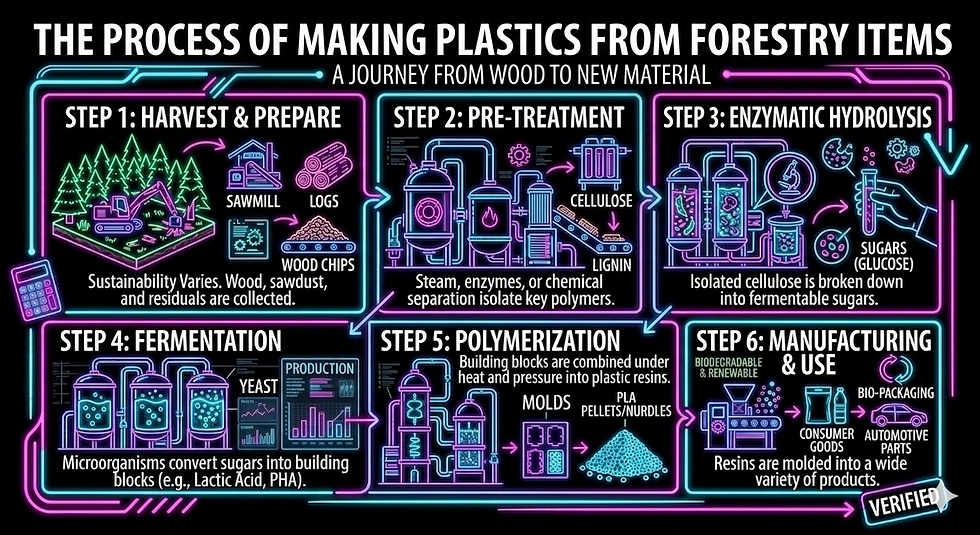
But we have to be careful about how much we take. In a healthy ecosystem, fallen trees and branches are meant to rot, acting as a natural multivitamin that returns nitrogen and phosphorus to the soil. If we clear the forest floor too much to fuel a gargantuan plastics industry, we risk depleting the very things that keep the forests alive.
Of the forestry-based bioplastic options, the most ethical and sustainable solution is already right in front of us: tapping into the 100 million tons of urban wood waste and forest scraps generated every year. This allows us to scale up to meet some of the demand by using what we already have, such as scraps and industrial leftovers.
It’s a sector that is growing at its own pace and not something I would eliminate. We need to do something about all those scraps, but because our forests are already so fragile, I wouldn’t recommend it as the primary focus for the rapid scaling we need right now. Although other sectors do require farming, which has its own consequences, they are far more scalable and profitable for what we need.
Besides, there are so many farmers right now who need to sell the crops they are already growing, this could stimulate the agricultural sector and boost a middle America economy. On top of that, other bioplastic alternatives don’t carry the same risk of disrupting something that makes the literal oxygen we breathe.

Bioplastics Are Good For The Economy
To understand how this works, we have to look at the three ways these jobs are created. First, there are about 1.64 million direct jobs, which are the people actually growing, engineering, and manufacturing biobased products. Then, there are nearly a million indirect roles in the businesses that supply these sectors with the tools and services they need to operate.
Finally, another 1.33 million induced jobs exist because those millions of workers are out in the world spending their paychecks, supporting the economy overall. The jobs multiplier in the biobased world is 2.4. In plain English, this means that every single person hired to work on a project creates a ripple effect that supports another 1.4 jobs elsewhere in the economy.
The industry also affects every state, with the following ten states supporting the highest number of jobs (between 100,000 and 250,000 each): California, Texas, North Carolina, Georgia, Pennsylvania, Wisconsin, Ohio, Missouri, Florida, Alabama. North Carolina stands as the undisputed powerhouse in enzymes, contributing nearly $4.8 billion in value. California dominates agriculture and forestry, followed closely by Wisconsin and Pennsylvania. In the South, Georgia has carved out a lead in biobased textiles, while the Midwest shines in biorefining and packaging, with Illinois taking the top spot in both categories.
Investing In These Manufactures, Right Here At Home, Is Just Good Business
These companies could offset the rising costs of plastics and fulfill President Trump’s initiative to bring back manufacturing to the USA. We’re right there, and thanks to 25 years of good old-fashioned American science innovation, the US is ready to meet the current crisis. We’ll reduce our dependence on ever-bulging oil prices and give good-paying, quality jobs to skilled American workers.
Here. Let me show you.
To offset the current hydrocarbon crunch, scaling up requires two things: existing production capacity and a reliable, American-grown feedstock. Right now, NatureWorks (Minnetonka, MN) and Danimer Scientific (Bainbridge, GA), which I’ve already discussed, are best positioned to pivot and scale rapidly because they have already moved beyond the pilot phase to industrial-scale operations.
But scaling isn’t just about making the “goop”; it’s about turning it into products. Avient Corporation (Avon Lake, OH) specializes in the formulations and additives that make bioplastics perform like oil-based ones. They are the “secret sauce” providers. If a hospital needs to switch from PVC to a bio-based polymer overnight, Avient has the technical infrastructure to help thousands of small manufacturers recalibrate their machines for the new material.
DuPont / Spectrum Plastics (Alpharetta, GA), with their impressive footprint in medical-grade extrusion, have the existing cleanroom capacity to switch production lines from petroleum polymers to bio-based resins like those from NatureWorks or Corbion. Their ability to rapidly retool existing medical device manufacturing lines is the next step of a quick scale-up.
The reason these companies can scale so effectively in 2026 is that they are built on vertical integration. By sourcing raw materials from American farmers, they bypass the volatile global oil markets. When a hospital or a tech giant sees their plastic costs jump, these alternatives suddenly become the most fiscally responsible option on the table. Bioplastic manufacturers are no longer startups, but are a burgeoning industry ready to turn a hydrocarbon crisis into a bio-based market disruption.
Could We Make This Change Quickly Enough To Help Us?
Yes. Yes, we could. We just need those savvy investors with vision who are built different.
Like combining traditional gas with ethanol, we can start this process almost immediately. Do you have what it takes? Where would you even start? Well, I would begin by tapping into some of the infrastructures I’ve mentioned and help bring USA-based high-quality jobs to skilled workers by the end of the summer.

For the thousands of American companies that take plastic pellets and turn them into forks, car parts, or medical tubing, the switch is often surprisingly straightforward. This is because many bioplastics are designed as those drop-in replacements we talked about before.
Most modern injection molding and extrusion machines, the workhorses of the industry, can run bio-based resins like PLA (from corn) or PHA (from microbes) with only minor adjustments to temperature and pressure settings.
Then there are companies like Avient and Spectrum Plastics that specialize in creating bio-based blends which mimic the exact melting points of traditional oil-based plastics. For a mid-sized factory in the Midwest, switching from petroleum-based polyethylene to a bio-based version might only require a few hours of recalibrating their existing equipment.
Molding, though, is the easy part. The manufacturing of the raw resin is where the difficulty lies. You cannot simply pour corn syrup into a refinery designed for crude oil. For example, a petrochemical plant uses high-heat cracking to break down gas and oil molecules. A bioplastic plant uses large-scale fermentation vats, which are essentially like giant beer breweries, to let microorganisms grow the plastic.
Wouldn’t it be crazy pants if beer brewers became the new bioplastic revolutionaries 🤣?! Regardless, there are companies out there that could do this.
And I have to acknowledge the location issues that we would have to overcome. Oil-based plastic production is clustered around the Gulf Coast’s wells and refineries. Bio-based production needs to be near the feedstock, like the corn belts of Nebraska or the timber forests of the Southeast. You can’t switch a facility on a dime and usually have to build a new one from the ground up. But because building new plants takes years,
American manufacturers are using two strategies to speed up the switch:
Bio-Attributed Processing: Some large chemical companies are now co-processing, where they mix a small percentage of bio-based oil into their existing refinery lines. This allows them to use their massive oil-based infrastructure while slowly increasing the biological content of the final product.
The Masterbatch Approach: Many manufacturers are switching to hybrid plastics, using 30% bio-based material mixed with 70% traditional plastic. Much like what we are seeing with ethanol and traditional gas, this allows them to offset some of the high oil costs of 2026 without having to completely abandon their established supply chains.
If a manufacturer wants to change what they buy, meaning the pellets, they can switch almost overnight. If they want to change how they make those pellets, it’s harder. Thankfully, leaders like NatureWorks and Danimer have already done the hard part, providing a ready-to-use supply for any manufacturer willing to make the jump.
Then, after you secure the manufacturing, you would tap into the already existing distribution market to form the plastics into products and get those out to key sectors like healthcare, clothing, and household items.
I Ran Some Very Conservative Estimates, But They Are Promising
Spoiler Alert: It’s Good Business!!!
My very conservative estimates put the value of the global bioplastics market at roughly $27.6 billion today, and projections possibly soaring past $90 billion over the next five years. This growth is anchored by a solid economic foundation; for every job created in this sector, more are supported in the wider economy.
For a high-scale manufacturing operation, whether focusing on drop-in bio-plastics or specialty resins like PHA, the financial path is promising. Starting with steady market growth and gross profit margins around 15-22%, a mid-sized facility can expect to hit its stride quickly. By 2028, these margins could climb to upwards of 30%, eventually reaching a mature state by 2031 with optimized pricing and significant earnings.
Like I said, even with an Iran deal right now, the world oil market is in shambles, and the effects of this crisis are likely to last for years, if not decades.
For that, built a different investor, an initial launch in 2026 would focus on reaching breakeven, but the march to high growth would happen quickly. Unlike the experimental phase of the early 2020s, securing pre-orders from major brands can hit operational breakeven in as little as 18 to 24 months. By year five, a typical plant could produce about 20,000 to 50,000 tons annually, with possible earnings between $40 million and more than $60 million.
This could make the bioplastics manufacturing sector a resilient asset class.
And I keep emphasizing how conservative I kept these estimates because we just don’t know how bad the crisis is going to get. The path has been set, and the oil industry has no incentive to return prices to what they were. Why would they? They have us in a chokehold. Or at least, they have the rest of the world in a chokehold. The US is an innovative leader in science and manufacturing, and that puts us in a unique position to make a change that drives our economy. And, just like with ethanol in our gas tanks, we could slash prices once again for the average American family.
In our present energy crisis, savvy investors who meet America’s urgent plastic needs could see returns far beyond my estimates.
The next manufacturing barons are ready to take the market by storm, and the time is now to make moves that generate generational wealth and prosperity. And you get to stop a crisis that could cripple the middle class, creating high-paying jobs for decades to come right here in America? I mean… it’s kinda obvious if you think about it.
Thank You For Spending This Time With Me Today.

All Content, Audio, Visuals & Imagery Are Property of JWPhD
Copyright 2026
I hope you will Like, Share, Follow, Subscribe and Comment below.
Don’t forget to check out Human Verified on Social!

Thanks to Gemini, YouTube, and the entire Google suite of products for assisting with this and all the Human Verified articles.



Comments