
Resistance is Futile
- Jeanna Winchester PhD

- Feb 23
- 19 min read
Updated: May 18
This is one aspect of AI I would be super down for.
February 23, 2026
Resistance Really is Futile
There is a lot of anxiety in the world today about machines replacing us or algorithms taking over our lives. I’ve argued that no line of code or silicon model can truly replicate the biological masterpiece that is the human body. AI can certainly assist us, but it doesn’t “live.” While we have to be thoughtful about the intentions of the people behind the machines, the technology itself isn’t the risk—it’s the potential solution.
The application of AI that keeps me up at night—in the best way possible—is bionics. For a century, movies have teased us with “super-humans” and mechanical heroes. But from a Human Verified perspective, I’m not chasing superpowers or trying to be a comic book character. I’m simply looking to fix what was shattered and reclaim what was stolen. For those of us living with the daily reality of paralysis, the choice isn’t a scary philosophical debate; we wouldn’t hesitate for a second to sign up if it meant winning back our independence.
One day, bionics could change my life.
The Collision of Two Worlds
In Star Trek: The Next Generation, the Borg are the ultimate “cautionary tale.” They are known for their terrifying efficiency, “assimilating” individuals by replacing their organic parts with hardware and plugging their minds into a collective “Hive Mind.” For decades, I was a neuroscientist and medical professor teaching doctors how the motor system works. Back then, I looked at the Borg as a cool, sci-fi representation of cold, mechanical perfection.
Then came 2018.
I was just sitting on my couch when my neck gave way. It sounded like glass shattering in my head. In that one mundane, horrific moment, my cervical spine collapsed, crushing nearly 30% of my spinal cord from my eyes to my diaphragm. The upper left quadrant of my body was paralyzed in places, and I had lost almost all function in my left arm.
Suddenly, I wasn’t the professor looking in; I was the patient. The motor disorders I’d spent ten years lecturing about were now my own reality.
Building the Digital Bridge vs. Joining the Collective
The Borg use something called a “subspace link” to keep every drone connected to the group. In the real world of bionics, we are building something similar called a Brain-Computer Interface (BCI), but with a vital difference in purpose.
The Borg Way
They use their link to erase the individual, turning the person into a tool for the hive.
The Human Way
We use the BCI to restore the individual. By placing a high-resolution sensor on the motor cortex, we capture your unique neural signatures. We want the brain and the bionic gear to speak the same personal language so you can move again on your own terms.
When a Borg drone decides to move, then Artificial Intelligence (AI) decodes that command instantly. In our reality, AI acts as a personal “translator.” It filters out the messy biological “noise” caused by my injury so that when I think the word reach, a bionic exoskeleton understands that intent and finishes the physical movement my nerves started but couldn’t complete.

The Final Frontier of Healing
The Borg’s catchphrase is “Resistance is futile.” In the world of medical recovery, I’ve realized that’s actually true, but not in the way the villains intended. When biology reaches its absolute limit, resisting the help of technology is futile if you want to keep moving forward.
Paralysis is a grueling, daily battle with your own body. I have been an “impossible” miracle—thanks to my family and my doctors, I regained some of my function, a feat that 98% of people with my injury never achieve. But I still feel that “survivor’s guilt,” and with it, a responsibility to push for the next chapter.
Acceptance of a disability doesn’t mean you stop fighting for a better future. We are moving away from the old idea of “fixing” what is broken and toward a future where we simply reroute our existence. Like a Borg drone, but with a human soul, we are ignoring the injury and building a bridge to the future. So, if they’re looking for the next “Seven of Nine” to test the limits of what a Digital Bridge can do, sign me up. This isn’t the end of my story; it’s just the beginning of the upgrade.
The Revolution Has Already Begun
The bionic revolution isn’t some far-off sci-fi dream hidden in the future; it is a reality that has been quietly and steadily unfolding for decades. While we often think of this as a modern phenomenon, the foundation was actually laid back in the 1960s with the development of the “Belgrade Hand” in Yugoslavia. Although that early model was quite clunky and lacked the elegance of today’s sleek carbon-fiber gear, it was a total game-changer. It provided the world with the first real proof that a mechanical device could be engineered to mimic the complex, multi-jointed movements of a human hand.
Since those early days, the technology has evolved from simple mechanical tools into sophisticated wearable computers that essentially “listen” to your biology. Instead of just reacting to physical levers, today’s bionic limbs intercept the tiny neural signals. The device then uses high-speed processors to analyze that data and translate your mental intentions into immediate physical actions. This means that simply thinking about reaching for a warm cup of coffee or deciding to take a stroll down the street becomes a seamless command that the hardware executes in real-time.
The real leap in this field occurred with the invention of the cochlear implant. This was a monumental milestone because it represented one of the very first times humans successfully plugged a machine directly into the nervous system. By creating a bridge to the auditory cranial nerve, the implant takes raw sound waves from the environment and converts them into sophisticated electrical pulses. The brain then receives these pulses and interprets them as clear speech or beautiful music, effectively bypassing a broken biological link.

As we moved into the late 1990s and the early 2000s, this progress exploded into a new era of life-saving and life-enhancing tech, yielding the first fully functional artificial hearts and advanced robotic arms. Today, we are standing on the newest frontier: the marriage of this hardware with Artificial Intelligence. We are no longer just building better “parts”; we are developing limbs that possess the “intelligence” to learn your specific gait, adapt to uneven terrain, and anticipate your next move. This shift is profound because it marks the transition of bionics from being a tool you merely wear to becoming a true, integrated part of who you are as a human being.
Bionic Integration
Integrating a bionic limb is far more than a simple mechanical attachment; it is a high-stakes translation project between complex human biology and sophisticated digital code. To make a prosthetic feel like a genuine part of the body rather than just a tool, science relies on four fundamental pillars of integration.
The Structural Anchor: Osseointegration
The first pillar is Osseointegration, which solves the problem of how a machine physically connects to a human. For years, patients had to use uncomfortable “sockets” that slipped over the skin, often causing sores and instability. Today, surgeons can implant a medical-grade titanium bolt directly into the remaining bone. As the body heals, the bone actually grows into the metal, creating a permanent, rock-solid bond. This allows the limb to be “clicked” into place, providing a superior range of motion. More importantly, it grants the user Osseoperception—a phenomenon where you can actually feel vibrations traveling through your skeleton. This means you can “sense” the difference between walking on gravel versus pavement through the limb itself.

Rewiring the Controls: Targeted Muscle Reinnervation
The second pillar, Targeted Muscle Reinnervation (TMR), handles the “wiring.” When a person loses a limb, the nerves that once controlled it are still there, acting like live wires with nowhere to send their signals. In TMR surgery, doctors reroute these nerves into nearby healthy muscles, such as the chest or upper arm. This creates a new control panel: when you think the command “close hand,” your chest muscle twitches in response. Advanced sensors detect that specific muscle twitch and instantly tell the bionic hand to move. It’s a brilliant way of using your body’s existing “cables” to speak directly to the new hardware.
The Digital Bridge: Neural Interfaces
For the highest level of precision, we use Neural Interfaces, which go straight to the source of the signal. This is done by wrapping tiny electrodes around Peripheral Nerve Interfaces (PNIs) to catch signals as they travel through the limbs. For those dealing with spinal injuries, it can go even further by placing sensors directly on the brain’s Motor Cortex. This is known as a Brain-Computer Interface (BCI). By capturing your “movement intent” directly from the brain, the technology can bypass a damaged spinal cord entirely, catching the command before it ever hits the site of the injury.

Closing the Loop: Sensory Feedback
The final pillar is the Holy Grail: Sensory Feedback. Until recently, movement was a one-way street; you could tell the limb what to do, but it couldn’t tell you what it was touching. By “Closing the Loop,” we add sensors to the bionic fingertips that send electrical pulses back to the brain. This allows the user to actually “feel” a real sensation if they touch something hot, sharp, or soft. This breakthrough is life-changing because it means you no longer have to constantly watch your hand to know if you are holding an object securely—you can simply feel it, just like a natural limb.
The AI Partner
This is the ultimate in AI assistance! Between your nerves and the motors sits an AI Decoder. Neural signals are incredibly “noisy” and messy, so the AI acts as a translator, filtering out the biological static to find the specific pattern for “pick up that cup.” Every person has a unique “neural accent,” and the AI learns yours over time.
Modern bionic legs even use AI to scan the ground hundreds of times per second. If it detects a hill or a curb, it automatically adjusts the ankle’s hydraulic pressure. This lowers the “cognitive load”—the mental tax of having to focus on every single step—so you can focus on your conversation instead of your mechanics. In the future, Quantum Chips (like those being developed by Google) could make this happen in real-time, allowing for a level of fluid movement that standard computers just can’t reach yet.
Your Bionics Are Learning You
In the world of modern medicine, bionic technology is no longer just a static tool you wear; it’s becoming a living partnership. We are moving away from the era of “dumb” prosthetics toward a future where the machine actually learns who you are. Every human body is biologically distinct. The specific way you flex a muscle, the timing of your movements, and the unique electrical “hum” of your peripheral nerves are as individual as a fingerprint. AI is the bridge that allows a piece of titanium and carbon fiber to understand that personal language.
This process begins with Pattern Recognition, which we can think of as the “learning phase.” When a patient is first fitted with a bionic limb, they undergo a calibration period where the AI acts like an observant student. As the user thinks about a specific movement—like pinching a key or pointing a finger—the AI monitors the resulting electrical signals. It isn’t just looking for a simple “on” or “off” command; it is analyzing a complex “signature” of neural activity. Over time, the computer builds a personalized digital map of the user’s intent. Eventually, the delay disappears: the moment you think about moving, the limb executes the action because it recognizes your specific neural shorthand.
Beyond just following orders, these devices are now adapting to the environment in real-time. Natural movement isn’t just a one-way street from the brain; it’s a constant conversation with the world around us. Modern bionic legs, for instance, are packed with sensors that scan the terrain hundreds of times every second. If the AI senses a slight incline, a stray pebble, or an uneven sidewalk, it doesn’t wait for the user to react. Instead, it automatically adjusts the hydraulic pressure or the motor torque in the ankle joint. This mimicry of human reflexes allows the user to walk naturally across a park or a crowded street without having to consciously micromanage every single step.
By handling these thousands of tiny corrections, AI significantly reduces the “Cognitive Load” on the patient. For decades, using a prosthetic was mentally exhausting because the user had to use 100% of their focus just to keep their balance or hold an object. AI takes over these “micro-adjustments”—the invisible balancing acts our bodies usually do automatically—freeing the user to focus on a conversation, a phone call, or simply enjoying the scenery.
Currently, bionic technology is exploding across several key sectors:
Neural Interfaces (Brain Gates): These are the cutting-edge implants that connect a computer directly to the brain’s motor cortex. They allow paralyzed individuals to operate computers or robotic arms purely through thought. We are even seeing “bidirectional” research where the limb sends signals back to the brain, allowing the user to actually feel the texture or pressure of what they are touching.
Exoskeletons: These are essentially wearable robots. These electromechanical suits act as “powered muscles” that can help a patient with a spinal injury walk again or assist workers in lifting heavy objects without straining their own bodies.
Advanced Surgical Techniques: Methods like TMR are becoming the gold standard. Surgeons actually rewire “lost” nerves to new muscle groups, which not only gives the patient much better control over a bionic limb but also significantly reduces the chronic phantom limb pain that often follows an amputation.
Through this combination of AI, clever surgery, and high-speed processing, we are finally reaching a point where the machine doesn’t just feel like a tool—it feels like a part of the family.
AI Power & Bionic Possibilities
We are standing on the edge of a massive shift in how we think about human potential, thanks to the evolution of newer AI models and the mind-blowing possibility of switching from traditional silicon to quantum chips. Since I’m a huge fan of the Google ecosystem—and I’m actually using their tools to write this right now—they are the perfect example of where this is headed. Google’s quantum technology is currently the world leader, hitting milestones that were purely science fiction just a few years ago.
The real “magic” happens when you think about what quantum chips could do for the learning process between a person and their prosthetic. Right now, most bionic limbs require a lengthy “training period” where the user and the computer have to learn to understand each other. But with quantum processing, that could happen in near-real-time. Instead of a slow calibration, the limb could theoretically adapt instantly to the unique electrical “language” of your nervous system. This would allow for a level of fluid, intuitive, and natural movement that standard binary processors—which only think in 1s and 0s—simply can’t keep up with.
If you want to see the cutting edge, you can check out Google’s Quantum AI lab. However, we have to stay grounded in reality: even with these incredible advancements, seeing a quantum-powered bionic limb at your local clinic is likely at least a decade away. While the potential for giving people abilities we never thought possible is very real, we are still firmly in the developmental and experimental stages.
That doesn’t mean the revolution isn’t already happening on the ground with standard AI. Companies across the globe are making stunning progress right now. Take Össur, a company based in Iceland. They have developed one of the most advanced bionic hands in existence, which uses sophisticated sensors to allow for gesture control. This means a user can switch between different grips or movements with just a simple, natural gesture. You can see this technology in action through their demonstrations here:
Similarly, the University of Utah has teamed up with the German engineering giants at Ottobock to create an AI-powered bionic leg. This isn’t just a static peg; it’s a smart device that mimics natural human gait. It gives people the freedom to climb stairs, stand up, sit down, and navigate tricky obstacles with ease, allowing them to walk much further and with less fatigue than ever before.
The field is getting crowded with innovators, and if you’re interested in where the future is going, there are several other notable names to keep on your radar. Companies like Medtronic, Abbott Laboratories, and Boston Scientific are bringing their massive medical expertise to the table. Meanwhile, startups and specialized firms like Psyonic, Atom Limbs, Bioniks, Curebionics, and Axile Bionics are pushing the boundaries of what a prosthetic can feel like. Even in the realm of direct brain-computer links, companies like Synchron, Neuralink, and Ekso Bionics are working on ways to ensure that one day, the “digital bridge” between the mind and the machine is completely seamless.
The Human Verified Reality
This circles back to the core idea of being Human Verified. As I’ve said before, “I am not a robot,” and the sheer complexity of our biology proves it. The human nervous system is so intricate that trying to simply “plug” a digital device into it can feel like trying to attach a garden hose to a fire hydrant—the sheer volume of information can practically blow the device out.
Our nerves communicate through electrochemical signal transduction, a fancy way of saying they use a mix of electricity and chemistry to talk. Even our most advanced computers use binary—a simple language of 1s and 0s—while the nervous system operates in a multidimensional way that science hasn’t even fully decoded yet. For a bionic limb to work, it has to catch your thought, translate that intention into a specific digital command, execute the physical move, and then sense the environment to adjust on the fly. In a healthy body, this entire loop happens in just one-third of a second.
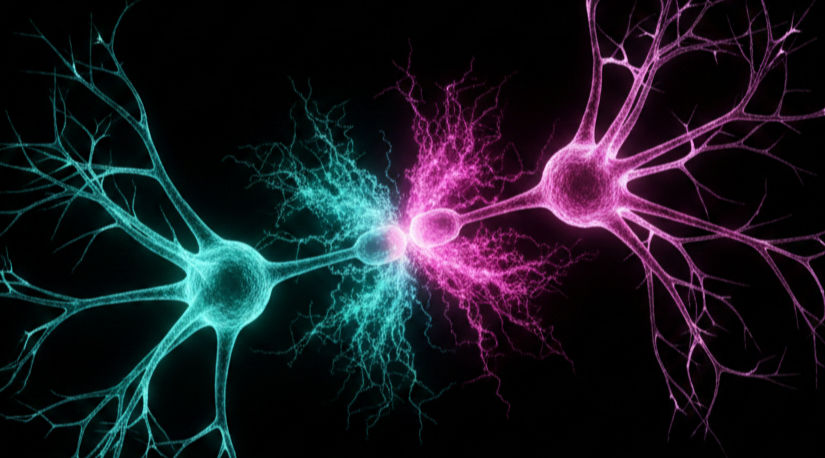
Beyond the language barrier, we face the physical reality of biocompatibility. To put it bluntly, the human body is a hostile environment for electronics; it’s warm, salty, and incredibly protective. When we implant a sensor, the immune system immediately flags it as a “foreign invader.” This triggers a process called glial scarring, where the body wraps the sensor in a layer of internal scar tissue. While the body is just trying to protect itself, this scar tissue acts like a thick blanket of insulation, eventually muffling the electrical signals until the sensor can no longer “hear” the brain’s commands.
Then there is the issue of bandwidth and resolution. Think of a natural human hand; it is packed with thousands of sensory receptors that give you instant updates on pressure, temperature, and where your fingers are. Current bionic interfaces have very low bandwidth by comparison. We might only be able to tap into a few dozen nerve fibers, whereas a natural limb uses thousands. This is why bionic movements can feel clunky or “robotic.” We are also still struggling with proprioception—that “sixth sense” that allows you to know exactly where your arm is in the dark without looking at it. Recreating this “closed-loop” feedback is one of the toughest mountains to climb in cybernetics.
We also have to consider long-term stability. For this technology to truly change a life, it needs to last for decades. However, the brain and muscles are constantly making tiny micro-movements. If you have a rigid electrode sitting against soft neural tissue, those tiny movements can cause the sensor to shift or even cause permanent damage. Plus, the wires—or “leads”—that connect internal sensors to the outside world are vulnerable to breaking or causing infections at the point where they exit the skin, known as the transcutaneous point.
From a medical perspective, we also have to consider the abandonment rate. If the gear is too heavy or the battery dies too fast, people stop using it. Success isn’t just about the surgery; it’s about the mental integration.
As a neurology professor, I used to tell my students: “Just because we move automatically doesn’t mean it’s easy; it just means we are really, really good at it.”
Finally, there is the mental mountain of neuroplasticity. Even if the hardware is perfect, the brain has to “re-learn” how to use it. If someone has been paralyzed for years, the part of the brain that once controlled their legs might have been “reassigned” to other jobs. Moving forward requires intense physical and mental therapy to reclaim those old neural pathways. Despite all these challenges, the field is moving at light speed. We are seeing breakthroughs in Osseointegration, where we anchor prosthetics directly into the bone, and Targeted Muscle Reinnervation, which involves rewiring nerves to new muscle groups. We are rapidly moving away from “tools we wear” and finally entering the era of “parts of who we are.”
We Are Humans & There Are Psychological Considerations
The journey of receiving a bionic limb is often much more complex than the surgery itself. While the technology might seem “super-human,” the transition is deeply, rawly human. Moving from the loss of a limb to the integration of a high-tech prosthetic involves a massive shift in how you see yourself, your body, and your mental health. From a Human Verified Perspective, becoming bionic is less about “plugging in” and more about an emotional and neurological evolution.
The Internal Shift: Identity and Embodiment
Amputation creates a fundamental rift in a person’s sense of self. When a bionic limb is introduced, the brain faces a paradox: it has to turn an “extra” object into a “part” of the body. This is called embodiment—the psychological breakthrough where you stop thinking of the prosthetic as a tool, like a hammer or a shoe, and start feeling it as a true extension of yourself. Interestingly, many people find more comfort in sleek, robotic designs rather than hyper-realistic ones. This is because of the “Uncanny Valley”—a feeling of revulsion that happens when something looks almost human but doesn’t move perfectly. By embracing a high-tech, “cybernetic” look, users often find it easier to accept their new identity.
The Cognitive Reality: Relearning Movement
Natural movement is automatic, but using a bionic limb is a conscious effort. It requires a heavy mental tax. Every single step or grip requires intense focus, which leads to massive mental fatigue. It’s easy to feel like a failure when you can’t make the limb perform “naturally” right away. Movies often show these as instant upgrades, but the reality is hundreds of hours of grueling physical therapy. Bridging the gap between that sci-fi hope and medical reality is a major hurdle for a patient’s resilience.
The Neural Connection: Quieting the Ghosts
One of the most fascinating scientific findings is how bionics can treat Phantom Limb Pain, which affects up to 80% of amputees. This happens because of “Proprioceptive Ghosting”—your brain keeps sending signals to a limb that isn’t there, and when it gets no response, it interprets that silence as pain. High-tech bionics, especially those with sensory feedback, can “close the loop.” By providing the brain with visual and tactile “proof” that the limb is moving, the technology leverages neuroplasticity. The brain’s motor cortex actually re-maps itself, quieting those confused neural pathways and providing genuine relief.
The Social Shift: From Pity to Agency
The way the world looks at you changes once you go bionic. Many users report a shift from being viewed with pity to being viewed with curiosity or even awe. This “Cyborg Transition” can be empowering, but it also means becoming a bit of a public spectacle. However, the real psychological win is the return of agency. It’s about the “micro-wins”—being able to hold a bag of groceries while unlocking a door, or standing up from a chair without help. These moments restore a sense of adult autonomy that disability often strips away.
The Human Reality: Survivor’s Guilt and Access
There is also a heavy social weight to this technology. Because these devices are incredibly expensive, a “Wealth Gap” has emerged. Those who are lucky enough to receive these “miracle” upgrades often feel a sense of survivor’s guilt, knowing that life-changing tech is locked behind insurance battles for others. This often turns personal recovery into a mission for global accessibility. In the end, we aren’t just “fixing a machine.” We are re-integrating a human being into their own life. The upgrade is only truly successful when you look at the carbon fiber and chrome and think, “That’s me,” not “That’s a motor.”
Make Me Bionic.
Building a Digital Bridge is the ultimate goal for anyone navigating the aftermath of a spine injury, which is essentially a massive communication breakdown within the body’s wiring. To understand this, think of your spinal cord as a high-speed fiber-optic cable carrying vital data. When that cable is crushed, your brain—the master controller—keeps right on firing off “commands,” but those electrical signals hit a dead end. The BCI isn’t just a gadget; it’s a sophisticated bypass system that reroutes your thoughts around the injury site, effectively ignoring the damage to restore your connection to the world.
The process itself is a breathtaking marvel of modern engineering. We start by placing high-resolution sensors on the brain’s motor cortex, the specific region responsible for planning and executing movement. When you think about a simple action, like grasping a cup, your neurons fire in a very specific, unique electrical signature. The BCI captures this “raw thought” before it ever reaches the “shattered glass” of the injury. That signal is then transmitted to a wearable computer, where AI takes over. This AI acts as a sophisticated translator; it filters out the massive amount of “biological static” or background noise from your other thoughts to identify that “Pattern A” is your intent to reach, while “Pattern B” is your intent to grip.
Once that intent is decoded, the system sends the command past the injury directly to the target. This can happen through Functional Electrical Stimulation (FES), where tiny electrodes on your skin “shock” your actual muscles into contracting, or by commanding a robotic exoskeleton to move your frame for you. But the “Holy Grail” of this technology is a phase called “Closing the Loop.” This involves adding sensors to a bionic limb that send data back to the brain’s somatosensory cortex. This restores proprioception—that essential “sixth sense” that allows you to feel that your hand is closed or that your coffee is hot without having to stare at your limb to make sure it’s actually working.
For someone like me, this is a total turning point. In my case, because 70% of my spinal infrastructure is still intact, a BCI could act as a neural amplifier. It can take those faint, muffled signals that manage to leak through the scar tissue and boost them, using an exoskeleton to provide the mechanical “nudge” needed to complete a movement my muscles started but couldn’t finish. We are moving away from the old medical philosophy of trying to “fix” the problem and toward a Human Verified reality of bypassing it with tech.
The year 2026 has brought incredible advancements specifically for the neck and upper body, moving far beyond the lower-back suits of the past. The Cyberdyne HAL (Hybrid Assistive Limb) is revolutionary because it “listens” to the faint bio-electrical signals (BES) that still reach your skin even after a 30% cord crush. It only moves when it detects your intent to move, which helps the brain re-wire itself through interactive feedback.
In clinical settings, the EksoNR is now FDA-cleared for injuries as high as the C7 vertebrae. Its SmartAssist AI is vital for cervical patients who often have asymmetrical strength; it can provide 100% power to a weaker left side while letting a stronger right side do the work, adapting in real-time as you get stronger. For home use, the ReWalk 7 now includes crutch-integrated controls and trunk-stabilizing harnesses, finally making stairs and curbs accessible for higher-level injuries.
The most exciting frontier is Hybrid Training, where we combine these exoskeletons with Epidural Stimulation—tiny electrodes implanted directly on the spinal cord. By “electrifying” the cord while you walk in the suit, we lower the threshold for signals to jump the gap. This isn’t just a tech trend; it’s a way to bridge the gap between “medical patient” and bionic pilot. If I were to go down this road, my goals have shifted toward fine-tuning my biological gains for high-tech integration through several key pillars.
To achieve bionic success, I focus on three practical areas: Control, Mobility, and Identity.
First is Control, which is all about sharpening the brain’s signals. I practice “Tactile Differentiation” by feeling textures like sandpaper or velvet without looking, which helps prime my brain for future sensory tech. I also work on the “1/3 Second Challenge” to make my movements faster and more automatic, and “Isolated Movement” to move one finger at a time without other muscles twitching. This creates a “clean” signal for an AI to read.
Next is the Exoskeleton Pillar. Using a robotic suit like the EksoNR requires perfect balance, so I use mirrors to practice “Symmetry Awareness” to keep my weight centered 50/50. I also find my “Nudge Threshold”—the exact point where my own strength ends and the machine needs to take over. I build “Vertical Endurance” by standing longer each day, which keeps my heart and bones “suit-ready.”
Finally, there is the Identity Pillar. This is the mental game. I use “Embodiment Check-ins” to visualize my digital bridge working, which actually helps my brain re-wire itself. I practice “Agency Advocacy” by tracking tasks I do alone, proving I’m the pilot of my life, not a victim. Lastly, I turn “survivor’s guilt” into a mission by sharing my neuroscience knowledge to help others who are still fighting to recover.
My ultimate personalized Bionic Milestone would to achieve a “closed-loop” moment: to perform a task, like grasping a coffee cup, while focusing entirely on the conversation I’m having. When the mechanics of my hand become invisible and the technology becomes “me,” that is when the upgrade is truly complete.

We’ll see what the future holds. For now, it’s physical therapy and compensatory techniques. It’s worked so far!
Thank you for spending this time with me.
All Content, Audio, Visuals and Imagery Are Property of JWPhD
Copyright 2026
I hope you will Like, Share, Follow, Subscribe and Comment below.



Comments